Research doesn’t seem so scary: Evaluation of a health-service-wide research capability building initiative
Emma Finch  1,2, Wei Qi Koh 2, Michelle Delaney 1,3
Abstract
Purpose: To explore the changes in confidence, experience and interest in research of healthcare professionals who participated in a research capability building initiative.
Methodology: A single-site cohort study in an outer metropolitan health service with an embedded mixed-methods design was used. Eighteen health
professionals participated in a research ambassador initiative (involving monthly research-education sessions and a research workshop). Participants completed customised surveys about their research experience, confidence and interest at baseline and six-to-nine months later. Interviews exploring participants’ experiences of the initiative were also conducted. Quantitative data were analysed using descriptive statistics and Wilcoxon signed-rank tests, while qualitative data were analysed using qualitative content analysis.
Findings: Eighteen health professionals commenced the program, with nine completing both baseline and follow-up measures. Interest in research tasks was higher than experience and confidence at both time points. There was a significant increase in experience writing a research proposal (p = 0.034), but no significant change in experience, confidence or interest for any other research tasks (all p > 0.05). Four overarching themes were generated: prior expectations, adding value to research capability, ‘pitching it right’ and vision of future initiative(s).
Research implications: Further refinement and evaluation are required to ensure that the initiative not only meets health service needs, but also leads to tangible improvements in research capability.
Practical implications: This research highlights that a targeted practical approach is required to increase skills of health professionals in specific research tasks.
Originality: This research explored a novel initiative designed to increase health-service research activity through education.
Limitations: A key limitation is the small sample size and use of self-reporting measures.
Keywords: research capability building, health service evaluation, workforce training, health-professional education, lifelong learning
- Research and Innovation, West Moreton Health, Ipswich, Queensland, Australia
- School of Health and Rehabilitation Sciences, The University of Queensland, Brisbane, Australia
- Princess Alexandra Hospital - Southside Clinical Unit, The University of Queensland, Brisbane, Australia
Corresponding author: Dr Emma Finch, Research and Innovation, West Moreton Health, Ipswich Hospital, Chelmsford Avenue, Ipswich, QLD 4305, Australia 4305, [email protected]
INTRODUCTION
A strong research culture within a health service contributes to the provision of the best possible care and is associated with lower patient mortality, higher patient and staff satisfaction, better staff retention and improved organisation efficiency (Harding et al. 2016, Moran et al. 2019). Despite these documented benefits, research opportunity and uptake in many health services is lacking internationally. Studies of the self-rated research proficiency of healthcare workers have mostly found moderate levels of research capability for basic research skills (e.g., finding relevant literature), and lower capability for more complex research skills (e.g., obtaining funding or writing an ethics application) (Frakking et al. 2021, Matus et al. 2021). In Australia, the rural and remote (i.e., non-metropolitan) nature of many health services can add additional challenges to health workforce research capability and capacity (Graffini et al. 2024, Schmidt, Webster & Lyle 2025). According to Outlon et al. (2022), this suggests that there is a need to build research capability and capacity within the healthcare workforce to cultivate a robust research culture, and ultimately optimise patient outcomes.
Given the benefits of research, several studies have focused on building research capacity and capability at an individual, team and/or health-system level. Matus, Walker & Mickan (2018) proposed that research capacity building should target three levels: foundational research skills (e.g., searching for relevant research literature), participating in research (e.g., assisting with data collection for someone else's project), and leading research; and that a whole system approach is required. Pain, Petersen and Fernando (2018) found that a multicomponent research capacity building initiative at a regional Australian hospital significantly improved allied health professionals' research experience over a four-year time frame. Positive effects of research capacity building programs have also been reported within specific disciplines such as social work (Withington et al. 2020) and occupational therapy (Harper et al. 2022).
One approach for building research capacity and capability is through research champions. The scope of research champions in the literature has encompassed promoting research at multidisciplinary meetings, discussing the feasibility of new studies, assisting with research recruitment, bridging the divide between research and clinical teams, and participating in research training (Hepburn et al. 2022, Spalding et al. 2016). To date, despite research ambassador champions being introduced in different settings, only a limited body of research has evaluated their effectiveness (Spalding et al. 2016, Hepburn et al. 2022). This study aimed to explore the experiences of healthcare professionals who participated in a health-service-wide research capability building initiative (i.e., a research champion initiative), including changes in self-reported confidence, experiences and interest in research.
MATERIALS AND METHODS
DESIGN
A single-site cohort study embedded mixed-methods design comprising customised quantitative surveys and interviews was used.
The reporting guidelines used were STROBE (STrengthening the Reporting of OBservational studies in Epidemiology) due to the cohort nature of the study, and SRQR (Standards for Reporting Qualitative Research) due to the qualitative element.
SETTING
West Moreton Health (WMH) is a public health service within Queensland, Australia, which includes a regional (outer metropolitan) hospital, four small rural hospitals, mental health facilities and eight correctional facilities. WMH has higher rates of obesity, disability, chronic disease, and socio-economic disadvantage compared to the rest of Queensland (West Moreton Health 2023).
Ethical approval for this study was obtained from the West Moreton Health Human Research Ethics Committee (HREC; approval number 100790).
PARTICIPANTS
Eighteen participants consented to participate in the evaluation, with nine completing the survey at baseline and at a follow-up six-to-nine-months later, as well as an interview. Participants were healthcare professionals who participated in the research capability building initiative. Recruitment occurred from 9 November 2023 to 29 February 2024. Participants were included if they were a staff member of the health service, if they had manager approval to participate and were currently participating, and if they attended three or more research ambassador sessions. Participants were excluded if they were not participating in the research capability building initiative, or if they were participating, but attended two or fewer sessions. Basic demographic data are presented in Table 1.
Table 1: Participant demographic variables at baseline (n = 18) and follow-up (n = 9, i.e., those with matched data across baseline and follow-up) for the survey
| Demographic variable | n = 18 Baseline |
n = 9 Follow-up |
| Division | ||
Allied health |
3 | 3 |
Clinical services |
1 | 0 |
Medical services |
4 | 2 |
Mental health |
3 | 2 |
Nursing |
5 | 0 |
|
2 | 2 |
| Highest qualification | School |
1 | 1 |
Diploma |
1 | 0 |
Bachelor |
5 | 1 |
Bachelor with Honours |
2 | 1 |
Postgraduate Certificate |
2 | 1 |
Coursework Masters |
3 | 1 |
Professional Doctorate |
1 | 1 |
Doctor of Philosophy |
3 | 3 |
| Current role | ||
Medical educator |
1 | 0 |
Clinical |
6 | 1 |
Management |
3 | 3 |
Educator |
1 | 0 |
Administrative |
2 | 2 |
Evaluation and research |
2 | 2 |
Clinical trials |
1 | 0 |
Technician |
1 | 0 |
|
1 | 1 |
| Location | ||
Hospital |
13 | 5 |
Mental health facility |
3 | 3 |
Prison |
2 | 1 |
THE RESEARCH CAPABILITY BUILDING INITIATIVE
The initiative involved a once-monthly one-hour online or hybrid (online and in-person) education session about different research topics and an annual in-person research workshop. The initiative was intended to meet research capability building strategies outlined in the literature, including provision of research education and training, opportunities to learn and apply research skills, mentoring and coaching from experienced researchers, access to research resources and protected time for research tasks (Matus, Walker & Mickan 2018). The initiative was run by two research development officers with extensive experience building research capacity and capability in health, and was funded in-kind by the health service.
During the first session, participants were asked to anonymously report their top three desired research topics. Following the session, two authors (EF, MD) coded the listed topics, and created a prioritised list of topics based on the frequency of the different codes. The second component of the initiative, the one-day workshop, was designed to provide participants with targeted, offline time to complete a research task. Participants were required to bring a research task to the workshop (e.g., writing a research protocol, completing data analysis, undertaking a literature review), where they completed the task while supported, as needed, by roving research development, ethics and governance, and library staff.
OUTCOME MEASURES
Outcome measures involved:
- A customised quantitative survey of participants' research experience, confidence and interest
A survey containing 16 survey items (Supplementary Material 2) was administered at baseline and six-to-nine months later (follow up). The survey was available in electronic and paper-based form. The survey involved Likert scales and multiple choice questions, and took approximately 15 minutes to complete. Questions covered basic demographic information; research confidence, knowledge and experience with 10 research tasks (including finding relevant literature, generating research ideas, and writing a research proposal); and general research interest, confidence and experience. The questions asked about overall research interest, confidence and experience, related to the 10 research tasks, adopted from previous research capacity and capability building research (Finch et al. 2013, Smith et al. 2002).
- Interviews exploring participants' perceptions of the initiative
Interviews were conducted along with the follow-up survey to explore participants' experiences and perceptions of the initiative. Interviews based on a topic guide (Figure 1) took place between July and October 2024 via Microsoft Teams or Zoom and were audio recorded. Each session lasted 25 to 36 minutes (Mean: 29 minutes).
PROCEDURE
Participants were invited to complete the baseline customised survey on entry to the initiative and the follow-up survey and interview six-to-nine months later. New participants were able to join the initiative after the initial cohort had commenced.
Figure 1: Interview Guide
- What did you find most useful about the research ambassador initiative?
- What did you find least useful about the research ambassador initiative?
- What aspect(s) of the initiative worked well?
- What would you change about the initiative?
- Given limited funding within the health service, in the future, if there was a reshaping of the research ambassador initiative, would you prefer monthly education sessions or a single-day offline research workshop to work on your own research task?
- Is there anything else you would like to share about the initiative?
DATA ANALYSIS
Quantitative data from surveys were analysed descriptively with IBM Statistical Software Package for the Social Sciences (SPSS), Version 29, using counts, medians and interquartile ranges (IQR), due to the small sample size. Wilcoxon signed ranks tests were conducted to determine statistically significant differences in research interest, experience or confidence between the baseline and follow-up ratings. Missing survey data were handled by omitting the data for questions that had missing data, while retaining all data from completed questions for a given participant.
In terms of qualitative interview data, all audio recordings were transcribed verbatim and imported into NVivo 14. Qualitative content analysis as outlined by Graneheim and Lundman (2004) was used to analyse the data. WQK familiarised with the data by listening to the recordings, reading and re-reading the transcripts. Thereafter, data were assigned codes and labelled based on their meaning unit. Codes were organised into categories derived from the research questions, and subcategories at different levels of abstraction (Graneheim & Lundman, 2004). These categories and subcategories were discussed with the research team, revised and re-organised following the team discussions and reflections. These were organised into themes and subthemes.
REFLEXIVE STATEMENT
To avoid potential biases that could influence qualitative data collection, an experienced qualitative researcher (WQK) who was not part of the initiative or health service led the qualitative interviews and data analysis. WQK is an occupational therapist with experience working within health services, and is an experienced qualitative researcher and interviewer. Preliminary findings were discussed with EF and MD, and this provided opportunities to contextualise findings considering the WMH context, and contributed to the overall trustworthiness of this work.
RESULTS
QUANTITATIVE DATA
Interest in the 10 research tasks rated higher than experience and confidence at both timepoints. There was a significant increase from the baseline to the follow-up measurement in experience writing a research proposal (p = 0.034), but no significant change in experience, confidence or interest in any other research task (all p > 0.05). When visually inspected, the nine participants who completed the measures at both timepoints had higher ratings on 16 of the 30 research ratings, compared to the larger baseline cohort (n = 18) ratings, including higher ratings of overall research experience, interest and confidence (see Table 2). This suggests that the group of participants who remained in the program had greater self-rated research proficiency and interest at baseline, compared with the larger baseline cohort. The high dropout rate (50%) mostly reflected participants leaving the research ambassador program, and leaving the health service.
QUALITATIVE DATA
Four overarching themes were generated: prior expectations, adding value to research capability, 'pitching it right' and vision of future initiative(s). The thematic map of the key themes and subthemes is illustrated in Figure 2.
The detailed qualitative results are presented in Supplementary Material 1.
Figure 2: Thematic map of key themes and subthemes
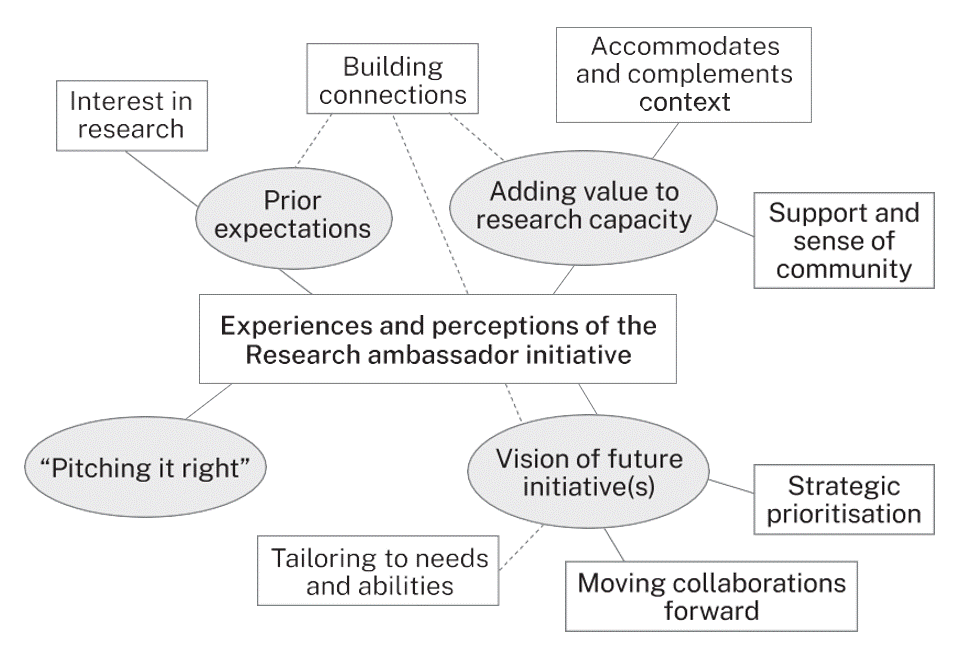
Table 2. Median values with interquartile ranges (in brackets) for the larger baseline cohort (n = 18) and matched data for the follow-up cohort (n = 9) for all items in the pre and post questionnaires
Entire sample |
Sample who participated at pre and post |
||||
Area |
Element |
Pre (n = 18) |
Pre (n = 9) |
Post (n = 9) |
p |
Finding relevant literature |
Experience |
3.50 (3.00-4.25) |
4.00 (3.00-5.00) |
4.00 (3.50-5.00) |
1.000 |
Interest |
5.00 (4.00-5.00) |
5.00 (4.50-5.00) |
5.00 (5.00-5.00) |
0.317 |
|
Confidence |
3.00 (3.00-4.25) |
4.00 (3.00-5.00) |
4.00 (4.00-5.00) |
0.317 |
|
Critically reviewing literature |
Experience |
3.00 (2.00-3.50) |
3.00 (3.00-5.00)# |
4.00 (3.00-4.50) |
0.317 |
Interest |
4.50 (3.75-5.00) |
5.00 (4.00-5.00) |
5.00 (4.00-5.00) |
1.000 |
|
Confidence |
2.50 (2.00-4.00) |
3.00 (2.00-5.00) |
4.00 (3.00-4.50) |
0.180 |
|
Generating a research idea |
Experience |
2.00 (2.00-3.00) |
3.00 (2.00-4.50) |
4.00 (3.00-4.50) |
0.059 |
Interest |
4.00 (3.00-5.00) |
5.00 (3.50-5.00) |
5.00 (4.50-5.00) |
0.083 |
|
Confidence |
3.00 (2.00-3.25) |
3.00 (2.50-4.50) |
4.00 (3.00-4.50) |
0.083 |
|
Writing a research proposal |
Experience |
2.00 (1.00-3.00) |
2.00 (1.00-4.00) |
3.00 (2.00-4.00) |
0.034 |
Interest |
3.50 (2.00-5.00) |
4.00 (1.00-5.00) |
5.00 (4.00-5.00) |
0.102 |
|
Confidence |
2.00 (1.00-3.00) |
3.00 (1.50-4.00) |
3.00 (3.00-4.00) |
0.084 |
|
Quantitative methods |
Experience |
2.00 (1.50-3.00) |
3.00 (1.50-3.50) |
2.00 (2.00-4.00) |
0.317 |
Interest |
4.00 (3.00-5.00) |
4.00 (3.50-5.00) |
5.00 (3.50-5.00) |
1.000 |
|
Confidence |
2.00 (1.75-3.00) |
2.00 (2.00-3.50) |
4.00 (2.00-4.00) |
0.083 |
|
Qualitative methods |
Experience |
3.00 (2.00-3.00) |
3.00 (2.00-3.50) |
3.00 (2.00-4.00) |
0.705 |
Interest |
3.00 (3.00-5.00) |
4.00 (3.00-5.00) |
5.00 (4.00-5.00) |
0.194 |
|
Confidence |
2.00 (2.00-3.00) |
2.00 (2.00-3.50) |
4.00 (2.00-4.00) |
0.157 |
|
Applying for research funding |
Experience |
1.00 (1.00-2.00) |
2.00 (1.00-2.50) |
2.00 (1.50-3.00) |
0.317 |
Interest |
3.50 (2.75-5.00) |
5.00 (3.00-5.00) |
4.00 (3.50-5.00) |
0.564 |
|
Confidence |
2.00 (1.00-2.25) |
2.00 (1.00-2.50) |
3.00 (2.00-3.50) |
0.058 |
|
Analysing and interpreting data |
Experience |
3.00 (2.00-3.25) |
3.00 (2.50-4.00) |
3.00 (2.50-4.50) |
0.414 |
Interest |
4.00 (3.00-5.00) |
5.00 (4.00-5.00) |
5.00 (4.00-5.00) |
0.564 |
|
Confidence |
2.50 (1.75-3.00) |
3.00 (2.50-4.00) |
3.00 (2.50-4.00) |
1.000 |
|
Oral research presentation |
Experience |
2.00 (2.00-3.25) |
3.00 (2.00-4.50) |
2.00 (2.00-4.00) |
0.083 |
Interest |
4.00 (3.00-5.00) |
4.00 (3.00-5.00) |
4.00 (2.50-5.00) |
0.257 |
|
Confidence |
2.00 (2.00-3.00) |
2.00 (2.00-3.50) |
3.00 (2.00-4.00) |
0.157 |
|
Writing a research report |
Experience |
2.00 (1.00-2.25) |
2.00 (1.50-5.00) |
2.00 (1.00-5.00) |
1.000 |
Interest |
4.50 (3.00-5.00) |
5.00 (4.00-5.00) |
5.00 (4.50-5.00) |
1.000 |
|
Confidence |
2.00 (1.00-2.25) |
2.00 (2.00-4.50) |
2.00 (2.00-4.50) |
0.655 |
|
Overall research experience |
2.50 (2.00-3.25) |
3.00 (2.00-4.50) |
3.00 (2.00-4.50) |
1.000 |
|
Overall research interest |
4.50 (3.00-5.00) |
5.00 (4.00-5.00) |
5.00 (4.50-5.00) |
0.317 |
|
Overall research confidence |
2.50 (2.00-4.00) |
3.00 (2.50-4.00) |
4.00 (3.00-4.50) |
0.257 |
|
Note: #n = 8. Bolding signifies a significant change between the pre and post questionnaires for the paired comparison.
DISCUSSION
The study explored the experiences of healthcare professionals who participated in a research ambassador initiative, aimed at building research capability in an outer metropolitan health service, as part of a larger research strategy to increase research capability and culture within the health service.
Writing a research proposal (or protocol) is often rated as an area of low-to-moderate skill by healthcare professionals (Harper et al. 2022, Schmidt, Webster & Duncanson 2019). In our study, the only significant increase between the baseline and follow-up measurements was in experience writing a research proposal. Writing a research proposal was the research task targeted in the one-day workshop, so it is unsurprising that participants reported significantly increased experience in this area. The lack of significant change in experience, confidence or interest in any other research task may have reflected a number of factors, including the need for individual research tasks to be targeted with practical reinforcement to produce change, a potential ceiling effect, and/or a change in awareness of what research involves. Research capacity and capability building initiatives should include specific research skill building in recognised areas of low skill, in accordance with Pager, Holden and Golenko (2012) who found a lack of research skills was a barrier to research engagement for 54% of health professionals surveyed. Additionally, the current study found self-reported quantitative improvement in the only research skill targeted during the workshop (writing a research proposal) with no significant changes in areas targeted by the education sessions alone, with participants also reflecting on the need for education followed by an opportunity to apply the skill. This suggests that practical experience through experiential learning is important for building research capability in healthcare staff, rather than just learning through lectures (Schmidt & Kirby 2016).
Consistent with previous studies (Dennett et al. 2021, Finch et al. 2013, Stephens, Taylor & Leggat 2009), participants in this study rated their interest in research tasks higher than their experience and confidence, initially and at follow-up, which was also reflected in their interviews as a desire for increased research knowledge and a greater capacity to share knowledge gained with their colleagues. This adds further support for the notion that health professionals are interested in actively engaging in research activities, but often lack the experience and confidence to do so, highlighting a lack of capability. Health professionals' experience and confidence in research for most research tasks did not increase due to the research ambassador initiative, which is in contrast to results from Spalding et al. (2016) and may indicate a ceiling effect.
Consistent with Hepburn et al. (2022), participants reported in the interviews that they enjoyed the opportunity to build connections with research-interested colleagues and create a sense of community, which may contribute to a positive research culture. Participants also reported benefits associated with having access to mentors who were experts in research and ethics, which is consistent with previous findings (Bonaconsa et al. 2024). Consistent with Matus et al. (2021), participants recognised the challenge of balancing research and clinical commitments. The structure of this initiative was viewed as good in terms of the frequency of sessions (monthly), duration (one hour), hybrid nature (usually online and face-to-face), and optional attendance.
While participants perceived the research ambassador initiative as valuable, they offered multiple suggestions for future modifications, including greater tailoring to individual needs and circumstances, a database of current research projects within the health service to further promote connections, and the introduction of drop-in support sessions.
A multicomponent strategy beyond a single initiative (the current research ambassador initiative) over a longer time period is likely required to produce tangible research change as measured by traditional, university academic metrics (Pain, Petersen & Fernando 2018). Health-service-driven research capacity building initiatives may indeed improve research culture, but this might not be visible using traditional measures of research output. There is a need for further research and collaboration, among health services, research centres and universities, to determine not only the most effective approaches to build research capacity, capability and culture within health services, but also the optimal metrics by which to measure this change, such as the Research Capacity and Culture Tool by Holden et al. (2012).
LIMITATIONS AND FUTURE DIRECTIONS
The small sample size might hinder the representativeness of results. There is likely self-selection bias, as volunteers were health service staff who were interested in research, and therefore had a higher baseline research interest, confidence and experience than the general health service cohort. This is expected in any research capability building initiative with staff volunteers, making the current group representative of typical research ambassador cohorts. The generalisation of the findings to other health services might be limited by the restriction of the current study to a single health service with unique features (e.g,. rural facilities and the low socio-economic status of patients within the health service). It is also possible that the quantitative results may have been limited by potential ceiling effects. We acknowledge that there is risk in asking people who are novice researchers to identify research topics for education without sufficient prompting. To counteract this, future initiatives could include a research-training-needs assessment to prompt suitable reflection from each learner. Finally, it is acknowledged that self-reported interest and confidence do not always reflect actual levels; however, this self-rating method has predominantly been used to assess previous research champion programs (Hepburn et al. 2022, Spalding et al. 2016).
CONCLUSION
The research ambassador initiative was perceived as valuable by participants, but led to minimal change in research interest, experience or confidence, which may have reflected the short initiative time frame or a ceiling effect. Participants reported feeling more supported and connected in research, indicating an improvement in research culture. However, there was tangible change only when a skill was directly targeted in a workshop involving practical experience. This suggests the initiative may help improve the research culture for participants, but that a targeted practical approach is required to increase specific research skills. Further refinement of the initiative is required to ensure it not only meets health service needs, but also leads to tangible improvements in research capability and culture.
Acknowledgements
We would like to express our gratitude to the West Moreton Health Research Ambassadors who participated in this study.
Data availability statement
The data that support this study will be shared upon reasonable request to the corresponding author.
Conflict of interest
The author(s) declared no potential conflicts of interest with respect to the research, authorship, and/or publication of this article.
Financial disclosure statement
This research did not receive any specific funding.
References
Bonaconsa, C, Nampoothiri, V, Mbamalu, O, Dlamini, S, Surendran, S, Singh, SK, Ahmad, R, Holmes, A, Rasheed, MA, Mendelson, M & Charani, E 2024, 'Mentorship as an overlooked dimension of research capacity strengthening: how to embed value-driven practices in global health', BMJGlobal Health, vol. 9, e014394.
Dennett, AM, Cauchi, T, Harding, KE, Kelly, P, Ashby, G & Taylor, NF 2021, 'Research interest, experience and confidence of allied health professionals working in medical imaging: a cross-sectional survey', Journal of Medical Radiation Sciences, vol. 68, no. 2, pp. 121-30.
Finch, E, Cornwell, P, Ward, EC & McPhail, SM 2013, 'Factors influencing research engagement: research interest, confidence and experience in an Australian speech-language pathology workforce', BMC Health Services Research , vol. 13, pp. 1-11.
Frakking, T, Craswell, A, Clayton, A & Waugh, J 2021, 'Evaluation of research capacity and culture of health professionals working with women, children and families at an Australian public hospital: a cross sectional observational study', Journal of Multidisciplinary Healthcare , vol. 14, pp. 2755-66.
Graffini, J, Johnston, K, Farrington, A, McPhail, SM & Larkins, S 2024, 'The Australian clinical trial landscape: perceptions of rural, regional and remote health service capacity and capability', Health Research Policy and Systems , vol. 22, Article 171.
Graneheim, UH & Lundman, B 2004, 'Qualitative content analysis in nursing research: concepts, procedures and measures to achieve trustworthiness', Nurse Education Today, vol. 24, no. 2, pp. 105-12.
Harding, K, Lynch, L, Porter, J & Taylor, NF 2016, 'Organisational benefits of a strong research culture in a health service: a systematic review', Australian Health Review, vol. 41, no. 1, pp. 45-53.
Harper, KJ, Taylor, SL, Jepiuh, M, Mino, P, Huynh Tran, A, Tam, WY & Harris, C 2022, 'An observational cohort study to determine the impact of research capacity building strategies implemented in an Australian metropolitan hospital occupational therapy department', AustralianOccupationalTherapyJournal, vol. 69, no. 2, pp. 190-204.
Hepburn, Z, Broomfield, K, Dowdeswell, N, Harvey, M, Lane, J, Walker, M & Kuruvilla, T 2022, 'A qualitative evaluation of a research champions initiative in an NHS Trust', Progress in Neurology and Psychiatry , vol. 26, no. 2, pp. 37-40.
Holden, L, Pager, S, Golenko, X & Ware, RS 2012, 'Validation of the research capacity and culture (RCC) tool: measuring RCC at individual, team and organisation levels', Australian Journal of Primary Health , vol. 18, no. 1, pp. 62-67.
Matus, J, Tearne, JE, Blyth, K, Coates, S, Pearson, S & Cavalheri, V 2021, 'An evaluation of research capacity and culture in a sample of Western Australian Allied Health professionals', TasmanMedicalJournal, vol. 3, no. 1, pp. 23-29.
Matus, J, Walker, A & Mickan, S 2018, 'Research capacity building frameworks for allied health professionals-a systematic review', BMC Health Services Research , vol. 18, pp. 1-11.
Moran, A, Haines, H, Raschke, N, Schmidt, D, Koschel, A, Stephens, A, Opie, C & Nancarrow, S 2019, 'Mind the gap: is it time to invest in embedded researchers in regional, rural and remote health services to address health outcome discrepancies for those living in rural, remote and regional areas?', Australian Journal of Primary Health, vol. 25, no. 2, pp. 104-07.
Oulton, K, Wray, J, Kelly, P, Khair, K, Sell, D & Gibson, F 2022, 'Culture, cognisance, capacity and capability: The interrelationship of individual and organisational factors in developing a research hospital', Journal of Clinical Nursing, vol. 31, no. 3-4, pp. 362-77.
Pager, S, Holden, L & Golenko, X 2012, 'Motivators, enablers, and barriers to building allied health research capacity', Journal of Multidisciplinary Healthcare , vol. 5, pp. 53-59.
Pain, T, Petersen, M & Fernando, M 2018, 'Building allied health research capacity at a regional Australian hospital: A follow-up study', TheInternet Journal of Allied Health Sciences and Practice, vol. 16, no. 1, Article 8.
Schmidt, D, Webster, E & Lyle, D 2025, 'Mechanisms to build research capacity in the rural health workplace: a realist synthesis', Frontiers in Medicine, vol. 12, Article 1584904.
Schmidt, DD & Kirby, S 2016, 'A modular approach to rural and remote research education: A project report', Ruraland Remote Health, vol. 16, pp. 1-9.
Schmidt, DD, Webster, E & Duncanson, K 2019, 'Building research experience: Impact of a novice researcher development program for rural health workers', Australian Journal of Rural Health, vol. 27, no. 5, pp. 392-97.
Smith, H, Wright, D, Morgan, S & Dunleavey, J 2002, 'The "Research Spider": A simple method of assessing research experience', Primary Health Care Research and Development , vol. 3, no. 3, pp. 139-40.
Spalding, G, Stikes, R, Sparks, K, Myers, J & Logsdon, MC 2016, 'Research champions: an initiative to improve use of research evidence in nursing practice', Journal for Nurses in Professional Development , vol. 32, no. 1, pp. E1-E5.
Stephens, D, Taylor, N & Leggat, SG 2009, 'Research experience and research interests of allied health professionals', Journal of Allied Health , vol. 38, no. 2, pp. 107E-11E.
West Moreton Health 2023, LocalAreaNeedsAnalysis(LANA)-SummaryReport 2022-2025 (2023 Refresh), prepared by West Moreton Health, Ipswich.
Withington, T, Alcorn, N, Maybery, D & Goodyear, M 2020, 'Building research capacity in clinical practice for social workers: A training and mentorship approach', Advances in Mental Health, vol. 18, no. 1, pp. 73-90.
SUPPLEMENTARY MATERIAL 1
DETAILED QUALITATIVE RESULTS FROM PARTICIPANT INTERVIEWS
Theme 1: Prior expectations
This theme describes participants' expectations and aspirations prior to joining the research ambassador initiative. Two subthemes were generated: interest in research and building connections.
Before joining the program, participants had varying levels of research knowledge and experience. Participants who had either no previous experience or little experience described the initiative as an avenue for them to learn more about research.
'My purpose for wanting to be involved in this initiative was to expand in my current scope, you know, understand how to engage in research and assist my area of where I manage at the moment. So that's chronic disease, so chronic condition services.' (Participant 5)
Participants who were experienced researchers hoped to learn how to advocate for research or build research capacity within their roles.
'… I've always helped like more experienced leaders with, with the actual doing part of research. But I haven't guided people… and so I wanted to kind of watch and see how (the facilitators) guided less experienced researchers in where to start, what questions, who to talk to.' (Participant 2)
Participants also hoped to build connections with other staff within the health service who were interested in research, and to establish prospective avenues for research collaborations. This was described as a motivator, particularly for those who did not have existing collaborators.
'How do you find people to collaborate with? Find people interested in the same sort of research areas? Find people with certain expertise that could be really relevant to your research so you can work together, you know? And they're the things that I don't know personally because I don't come from a Queensland Health or a government background ...' (Participant 8)
Theme 2: Adding value to research capacity
Participants described the research ambassador initiative as adding value to their research capacities. The added value is discussed under two subthemes: accommodates and complements contexts, and supportive environment and sense of community.
Accommodates and complements contexts
The initiative was described as well organised with a clear purpose, and easy to understand, particularly for people who had little experience in research. Topics relating to ethics applications, literature reviews, and grant writing were mentioned as being particularly pragmatic and useful. A few participants, who had more research experience, described the content as being a useful refresher. It particularly kept them updated with procedural changes.
'The examples set for me and the content that was delivered was spot on… it was largely for people who were beginning, you know kind of, 'I'm a little bit interested in research and what's it like' sort of ideas.' (Participant 2)
'… I think it's always good to stay up to date, and I think that's what was helpful about that talk, is where ethics approvals are at now… like, it had been quite a gap between when I was doing that for uni and now, so I think getting back into that space, I actually have really found it beneficial.' (Participant 1)
Participants agreed that the format of content delivery was ideal, including the duration and frequency of sessions, and the hybrid (online/ in-person) sessions. These were described as being considerate of the capacities of staff working within the health service.
'I like the structure. I like it's not too onerous. I think it's sort of once a month, or I'm not even sure. The time gaps between seem really good, because it's not too onerous. It's not hard to fit in so that you can still make it.' (Participant 1)
While most described the value of being able to attend monthly sessions online, participants who attended the full-day offline (in-person) workshop described it as being one of their favourite aspects of the initiative. Most participants agreed that being part of the initiative had been a positive experience. Many expressed that the initiative met their expectations, and were appreciative of the opportunity to be part of the initiative. Some participants expressed that research is less daunting than they had initially thought.
'So yeah, this is kind of getting a bit of insight into, I guess, not how it's done because like I kind of have that understanding of how research is done. But I guess all the steps leading up to do the research. And yeah, I think it's been quite good in that. It's just demystified it a little bit. It doesn't make it seem so scary…, I get that there's still steps and there's still hoops, but they don't seem as big or confusing or challenging [as] it can sometimes be made out to appear to someone who's never been involved in the process before.' (Participant 7)
'I think like if there was the opportunity to give feedback to the HHS [Hospital and Health Service], I think to just say how valuable I think that it is… to have the opportunity to learn more about the different facets of research, to actually have some dedicated time to think about it in terms of researching practice.' (Participant 1)
Participants, including those with leadership roles in the health service, described the initiative as being complementary to their existing roles and responsibilities. A participant with limited prior experience felt that this initiative facilitated her to contemplate research within her role:
'I think it has certainly helped me to think about things [that are] possible, research ideas within the work that I do.' (Participant 1)
A participant who was an experienced researcher expressed that the initiative provided her with opportunities to model capacity building within her profession:
'I found that really useful for like, 'that's the level that I need to kind of go to' for people who haven't done any research before… that's kind of where a lot of the psychologists are at, yeah. Yeah, that's my target audience as well.' (Participant 2)
Supportive environment and sense of community
Participants were unanimous in describing the value of establishing connections with other staff in the health service who had an interest in research.
'The connection to the ambassadors has been absolutely invaluable. I've been able to reach out to them… we feel that research is 'out there' too hard… (but) it's not, it's something that other people do. And I think through the ambassador initiative… talking to real people, doing real things in West Moreton… that has been key....... ' (Participant 4)
They also valued the connections that were made with key research personnel within the health service, which included the research development officers, librarians, ethics and governance officers. These personnel were described as being approachable, flexible, responsive and friendly. Participants also appreciated the ease of being able to reach out for support:
'The connections are very clear and so I felt very comfortable to reach out to (the research librarian), and so we sat down, and we were talking all things search strategies the other day, which was again really helpful for me.' (Participant 4)
'… established a few connections, which is what I sort of came in for, you know, knowing who's doing what… it's knowing who to contact and how to start? So, if I have a research project or have an idea … to get things going. So that was valuable, very valuable.' (Participant 8)
Participants valued being able to work alongside other participants (i.e., research ambassadors) during the full-day offline workshop in a dedicated environment that was free of typical work responsibilities. In addition, having these key research personnel present during the workshop enabled participants to ask questions readily, and this was described as invaluable.
'We also had the research ethics and governance offices in the workshop too… that's really unique, to actually have very engaged ethics and governance officers there to facilitate. So normally you would ask, you'd have to send an e-mail, or you'd have to put it in ERM [Ethical Review Manager] and hope that however many weeks or months down the track, someone would respond to you with advice. Whereas you could just ask those questions that you needed to ask, right there, and then get your answer. And again, it helps prevent you from going off track.' (Participant 6)
Theme 3: "Pitching it right"
This theme describes participants' perceptions of the initiative's fit with their experiences and abilities. Four participants who had previous research experience expressed that the topics that were foundational were not new to them. As such, some participants did not feel the need to attend all the online sessions.
'For me personally it is more that it covers stuff that I'm already I'm aware of. So other than it being a refresher… but that's my background, so that's the only thing that I would say was the negative.' (Participant 8)
One participant expressed that there was a topic on statistical analyses that would add value to her research capacity; however, she had hoped that it would be delivered in a more context-specific manner, such as with examples tailored to the health service's context.
A participant who was new to research expressed a lack of confidence to engage in sessions, particularly ones involving discussions:
'I was sort of a little bit torn. In that... really positive, loved listening, but really struggled to participate, really struggled to put myself forward. Now that may be myself because I do not have very much confidence in my language around research and things just didn't come top of mind... I felt like there was lots of very clever people there. I felt quite anxious about participating…' (Participant 4)
While participants appreciated the flexibility of being able to attend online sessions, one shared that the virtual nature made online discussions impersonal or difficult, especially when other participants had their cameras turned off:
'… we had to go off in our groups and I guess, without a facilitator, like, you know, one in the group that I was in, no one had their camera on. So then, no one was talking, and I was just like, 'hello, is anybody there?' And they're like, 'yeah'. But they wouldn't turn their (camera on)… it was a bit sort of like in a group situation where you're trying to collaborate and come up and discuss. In the real life, you'd have to see their faces… That was a little bit awkward.' (Participant 8)
Theme 4: Vision of future initiatives
Participants shared their visions of future iterations of the research ambassador initiative. These are discussed under three subthemes: tailoring to needs and abilities, moving collaborations forward, and strategic prioritisation.
Tailoring to needs and abilities
This subtheme describes participants' hopes that future initiatives could be more adaptive, based on participants' individual needs and circumstances. This included providing more context-specific examples during content delivery, and enhancing flexibility in the approaches to content delivery. When asked if participants preferred online, monthly educational sessions or a single offline workshop, they expressed that the former might be more useful for people who were new to research, while the latter was more suitable for people who had foundational knowledge about research, or had a project they were planning or currently working on. Recognising that a one-size-fits all approach is difficult, participants were divided on whether they would prefer attending online monthly sessions or a one-off workshop moving forward. The monthly sessions were thought to be useful for keeping one's motivation to engage in research. However, participants enjoyed the ability of an in-person workshop to build a sense of community. Alternative suggestions by participants included incorporating some educational elements into a full-day workshop, or having drop-in sessions, since people have different needs at any point in time.
'Maybe, you know, you have the first half of the day would be about learning or teaching, whatever you might do within your monthly meeting. And then, the afternoon might be designated time to work on like a project or something. Utilising those skills.' (Participant 5)
'As I said, suggested those drop-in sessions even. Yeah, I guess it would better cater for the fact that not everyone has the same question at the same time. And not everyone can attend. Say, 'How do I write a research question?' session at a specific time each year. So, I think having all those resources available to people is really helpful, and connecting them to that… using the people for particular things that you need them for, it's probably more useful for me.' (Participant 6)
There were also differing opinions on whether the frequency of sessions should increase or decrease, which could be attributed to differences in people's availability and capacity to work on research projects.
Moving collaborations forward
Most participants expressed the hope for more opportunities, and a desire for information on how to build prospective connections and collaborations.
'How do I, you know, find people like minded who are interested in similar stuff to what I'm interested in, and how do you then progress and move it forward? That's my main feedback from the ambassador initiative.' (Participant 8)
Suggestions included having more opportunities for in-person connections. Another participant suggested building a database of research projects within the health service so they could learn more about ongoing projects. This would also increase the visibility of people with research skills.
'Those people with research skills already within the organisation and how do we make them more visible as a resource and support for others? Is that putting their names up on the Internet page, for instance, and that they're happy to be engaged for questions around, say, quantitative research methods or how to write a literature review or those sorts? You know what I mean? It's that.
How do you then make those connections between those people with different skills and experience so that it truly is kind of a bit of an ecosystem that's formed in the health service?' (Participant 6)
Strategic prioritisation
A participant reflected on the terminology, 'research ambassador', suggesting that more clarity was required regarding the initiative's scope, distinguishing between research ambassadorship and research skills development, where training needs might differ, and potentially developing two streams to tailor to each type of training. A few participants also discussed the importance of continuity to build and drive research capacity within the health service following the initiative, which could be achieved by considering investment in people, and leveraging research ambassadors within the organisation. Suggestions included incorporating relevant key performance indicators (KPIs) and outcome measures within the institution.
'Do you start taking a more strategic approach around, do we have KPIs within divisions that that they have X number of research investor (sic) [investigators]? I don't know. Yeah, it's kind of having those strategic accountabilities for it or operational accountabilities.' (Participant 6)
SUPPLEMENTARY MATERIAL 2: SURVEY QUESTIONS
This supplementary material was part of the submitted manuscript and is presented as supplied by the authors.
DEMOGRAPHIC INFORMATION
- What is your division within WMH?
- Aboriginal and Torres Strait Islander Health
- Allied Health
- Clinical Services
- Medical Services
- Mental Health and Specialised Services
- Nursing and Midwifery
- Preventative and Prison Health
- Finance and Business Services
- People and Culture
- Strategy Governance and Engagement
- Other ________________________
- What is your highest level of qualification? (certificate, diploma, bachelor degree, bachelors with honours, coursework masters, master of philosophy, doctor of philosophy, other )
- In your current position, what is your major role? (clinical, administrative, management, other )
- What WMH facility do you currently work in? (list facilities)
INITIATIVE INFORMATION
Please enter the date today (free text box)
- What research ambassador initiative activities have you participated in so far (please tick): (community of practice, workshop, I have not participated in any activities yet, other )
GENERATING A UNIQUE CODE
Please generate a unique identifier consisting of the first three letters of your mother's maiden name and your year of birth. For example, if your mother's maiden name is Smith and your year of birth is 1951, your code would be SMI1951.
Please you use the same code every time you complete a survey for this initiative. The use of this code enables completed surveys to be matched across time points.
Please generate your unique code consisting of the first three letters of your mother's maiden name and your year of birth [insert code]
RESEARCH KNOWLEDGE, CONFIDENCE AND EXPERIENCE
- FINDING RELEVANT LITERATURE: Please indicate your experience, interest/desire & confidence at finding relevant literature on the scale below:
How experienced are you at finding relevant literature? |
None |
Little |
Some |
Moderate |
Very |
How interested are you in finding relevant literature? |
|||||
How confident are you at finding relevant literature? |
- CRITICALLY REVIEWING THE LITERATURE Please indicate your experience, interest/desire and confidence at critically reviewing literature on the scale below:
How experienced are you at critically reviewing literature? |
None |
Little |
Some |
Moderate |
Very |
How interested are you critically reviewing literature? |
|||||
How confident are you critically reviewing literature? |
- GENERATING RESEARCH IDEAS Please indicate your experience, interest/desire and confidence at generating research ideas on the scale below:
How experienced are you at generating research ideas? |
None |
Little |
Some |
Moderate |
Very |
How interested are you at generating research ideas? |
|||||
How confident are you at generating research ideas? |
- WRITING A RESEARCH PROPOSAL Please indicate your experience, interest/desire and confidence at writing a research proposal (e.g. an ethics submission) on the scale below
How experienced are you at writing a research proposal? |
None |
Little |
Some |
Moderate |
Very |
How interested are you at writing a research proposal? |
|||||
How confident are you at writing a research proposal? |
- USING QUANTITATIVE RESEARCH METHODS Please indicate your experience, interest/desire and confidence at using quantitative research methods on the scale below:
How experienced are you at using quantitative research methods? |
None |
Little |
Some |
Moderate |
Very |
How interested are you at using quantitative research methods? |
|||||
How confident are you at using quantitative research methods? |
- USING QUALITATIVE RESEARCH METHODS Please indicate your experience, interest/desire and confidence at using qualitative research methods on the scale below:
How experienced are you at using qualitative research methods? |
None |
Little |
Some |
Moderate |
Very |
How interested are you at using qualitative research methods? |
|||||
How confident are you at using qualitative research methods? |
- APPLYING FOR RESEARCH FUNDING Please indicate your experience, interest/desire and confidence at applying for research funding on the scale below:
How experienced are you at applying for research funding? |
None |
Little |
Some |
Moderate |
Very |
How interested are you at applying for research funding? |
|||||
How confident are you at applying for research funding? |
- ANALYSING AND INTERPRETING RESULTS Please indicate your experience, interest/desire and confidence at analysing and interpreting results on the scale below:
How experienced are you at analysing and interpreting results? |
None |
Little |
Some |
Moderate |
Very |
How interested are you at analysing and interpreting results? |
|||||
How confident are you at analysing and interpreting results? |
- WRITING AND PRESENTING AN ORAL RESEARCH REPORT Please indicate your experience, interest/desire and confidence at writing and presenting an oral research report on the scale below:
How experienced are you at writing and presenting an oral research report? |
None |
Little |
Some |
Moderate |
Very |
How interested are you at writing and presenting an oral research report? |
|||||
How confident are you at writing and presenting an oral research report? |
- WRITING AND PUBLISHING RESEARCH Please indicate your experience, interest/desire and confidence at writing and publishing research (e.g. a journal article) on the scale below:
How experienced are you at writing and publishing research? |
None |
Little |
Some |
Moderate |
Very |
How interested are you at writing and publishing research? |
|||||
How confident are you at writing and publishing research? |
- RESEARCH OVERALL Please indicate your overall experience, interest/ desire and confidence in conducting research on the scale below:
How experienced are you at conducting research? |
None |
Little |
Some |
Moderate |
Very |
How interested are you at conducting research? |
|||||
How confident are you at conducting research? |
OTHER COMMENTS
Please provide any other comments about the research ambassador initiative or this survey:
Thank-you for completing this survey